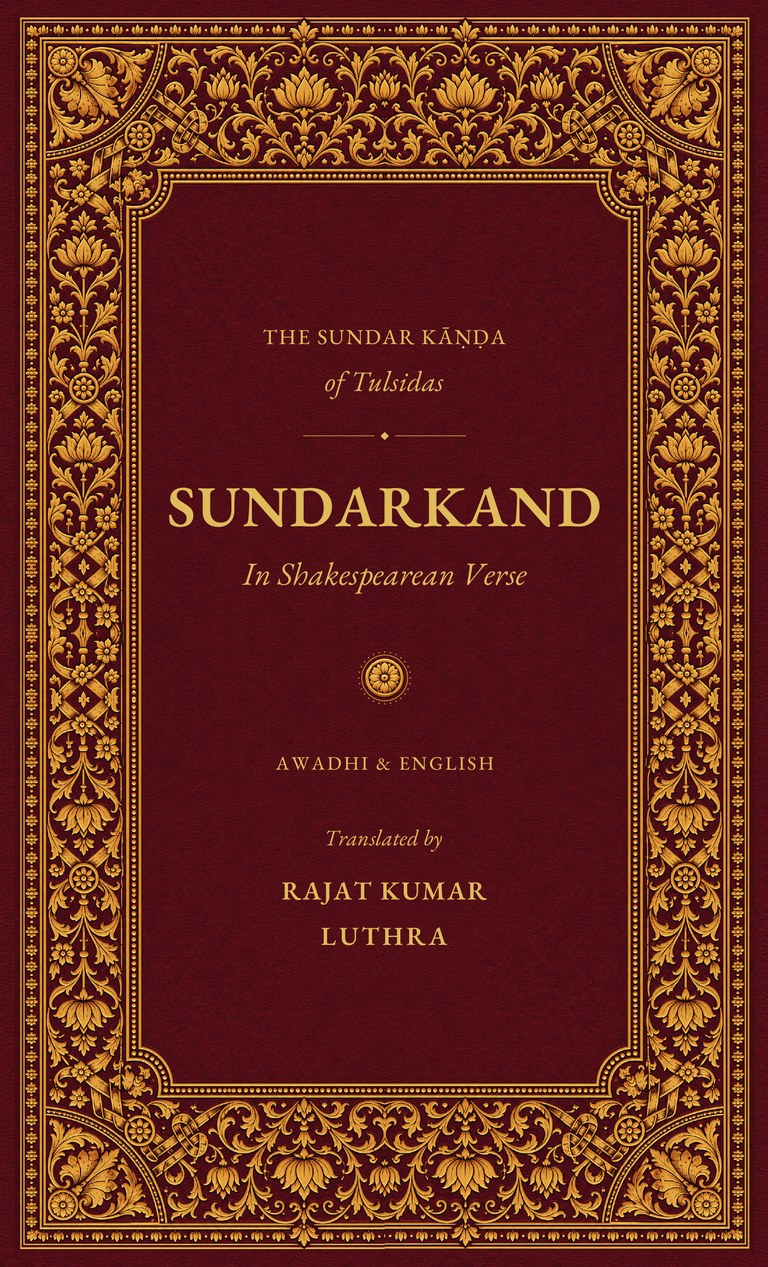
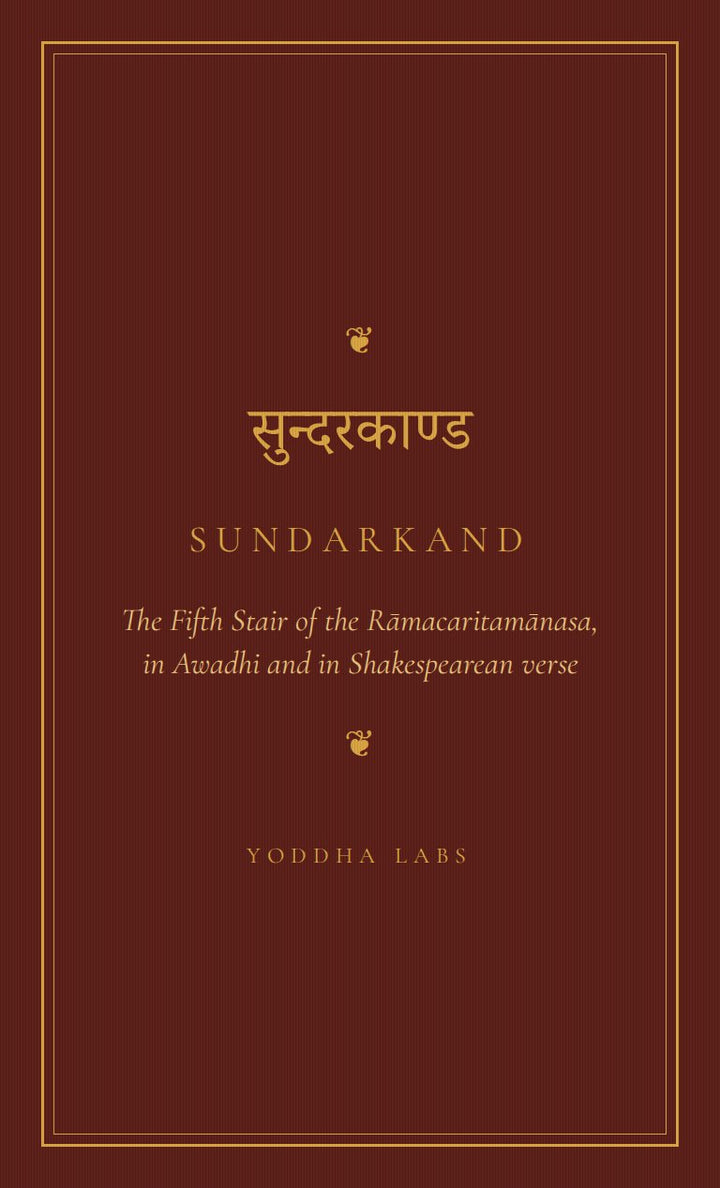
Sundarkand
Awadhi and English In Shakespearean verse
On Amazon
Tulsīdās and William Shakespeare belonged to the same age. This volume begins with an act of imagination: had Shakespeare heard Tulsīdās’s telling of Rāma, how might he have carried its devotion, grief, courage and wonder into English verse?
The Sundar Kāṇḍa is the book of Hanumān: the leap across the ocean, the finding of Sītā in the Aśoka grove, the burning of Laṅkā, and the return. The Awadhi stands beside the English.
“What rest were rest to me, ere Rāma’s work be o’er?”
This edition imagines a shared workshop at Kashi around 1610: a North Indian manuscript painter, a Devanagari scribe and a European engraver, responding to the story of Rāma.
Sixty plates, one for each doha, and the flowering borders carry that imagined collaboration into the page.
- Pages
- 206
- Trim
- 5.5 × 8.5 in
- Binding
- Hardback
- Language
- Awadhi and English
- Translator
- Rajat Kumar Luthra
- ISBN
- 978-81-685806-6-4
- Story
- Nº 01 · The Source
- In Devanagari
- सुन्दरकाण्ड

Drag to turn the book · Tap it to look inside
Use the left and right arrow keys to turn it; Home shows the front, End the back.
In numbers
The Fifth Stair- 60
- plates, one for each doha
- 206
- pages, Awadhi beside the English
- 1610
- or about then: the imagined workshop at Kashi where the pictures are made
The plates
Sixty, one for each doha-
Doha II

The trial of Surasa
-
Doha VIII
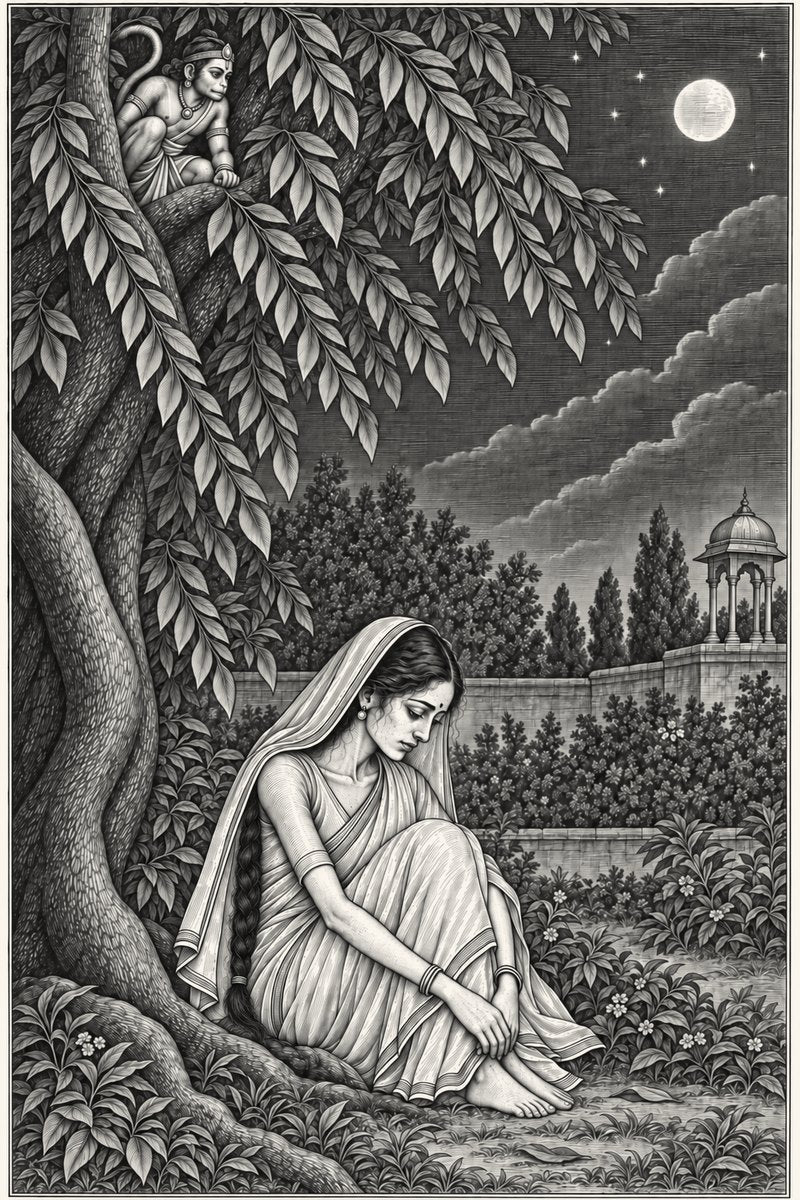
Sītā beneath the aśoka
-
Doha XVI

Hanumān reveals his might