COMPILATION · YL-COMP-1251 · 5 JUNE 2026 · FRIDAY · IST 07:02 DAY — SINCE FIRST LIGHTATTACHMENT II · THE ERASEDFILE REFERENCE · PROJECT-YODDHA · 24-PILOT-DOSSIERCLASSIFICATION · SECRET
Names the Empire Did Not Keep

Chamber II holds names the record was never asked to keep. The archive is aware of this framing. The archive has nonetheless filed the chamber tonight, because the question the record did not ask — about the grandmother's generation, about the ones the file did not hold — is answered here.

Two and a half million Indian subjects served in the Second World War. That is the figure the archive carries forward. The figure is not a count. It is an upper bound on the names the colonial record might have preserved and did not. The archive has opened three sub-files tonight: one man, twenty-four men, and two and a half million. Each sub-file is incomplete. Each sub-file is what the archive has.

The reader should note the structure. Chamber II narrows from the specific to the vast, not the other way around. The archive files it this way because the honest direction of recovery is not zoom-in but zoom-out. The man at Colditz is easier to hold than the twenty-four Indian pilots. The twenty-four are easier to hold than the two and a half million. By the chamber's close, the reader will have been asked to hold a number that does not resolve into faces. The archive considers this the correct emotional endpoint for Chamber II. The archive does not apologise for it.

The archive notes that Oflag IV-C — Colditz Castle, Saxony — held approximately two thousand Allied officers during the war. The castle held one Indian. The figure is not a detail. It is the central fact of Mazumdar's captivity. He was alone in a specific way that the other Colditz memoirs have not been able to describe, because the other Colditz memoirs were written by men who had at least one fellow countryman in the yard. Mazumdar did not. What follows is the archive's record of the moment he walked out of the ambulance column on the road to Boulogne and into seven years of being the only one.
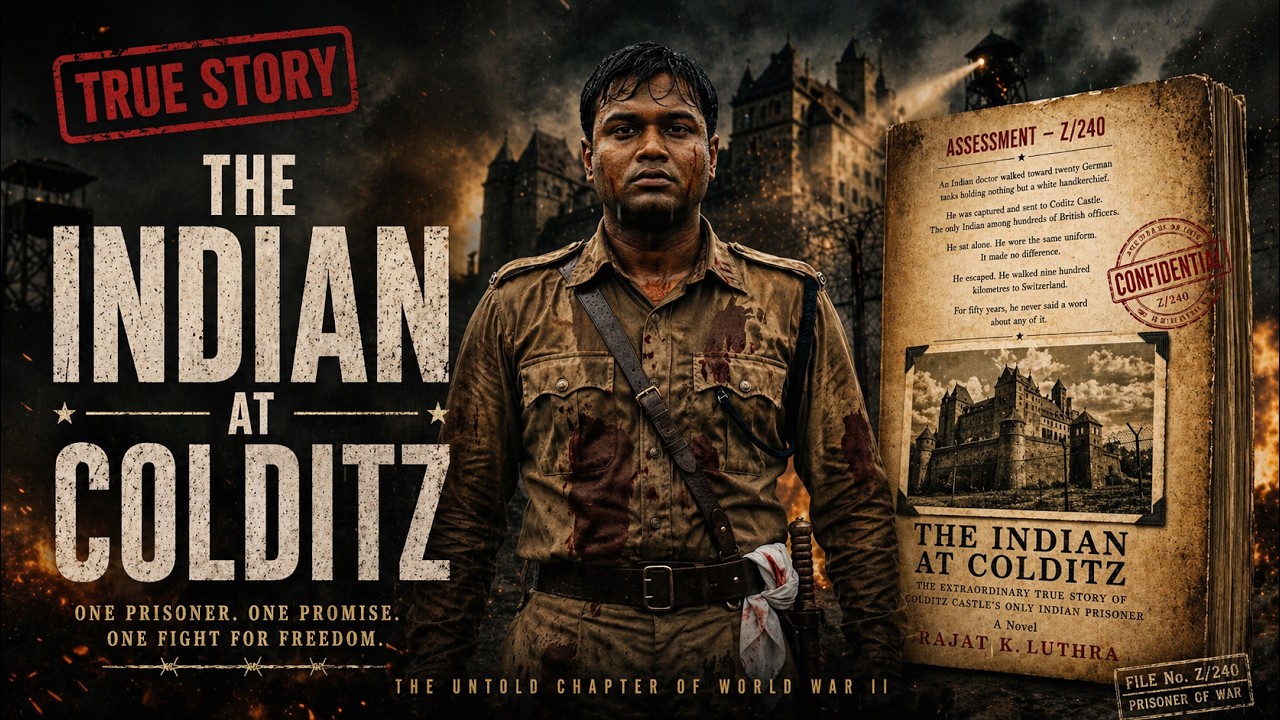
The Indian at Colditz — trailer
The Indian at Colditz YL-FA-003 · TRAILER · 2026
The Indian at Colditz — book cover
YL-NOVEL-003 · PUBLISHED

The Indian at Colditz

The castle they said no one could escape — 1943 AVAILABLE · KINDLE + PAPERBACK

The first Indian novel to render Colditz Castle from inside the castle. Mazumdar's seven years of captivity. The Boulogne road, the handkerchief, the word please.

ACQUIRE VOLUME →

The road was straight and the convoy was slow and the countryside on either side had the flat, wet stillness of a place that had recently been fought over and was now waiting to be fought over again.

Forty ambulances. He had counted them that morning at Étaples, counted them as he counted everything, with the automatic precision of a man trained to observe. Forty ambulances carrying five hundred wounded men, the wounded stacked in tiers, the column stretching a quarter-mile along the road to Boulogne and moving at the speed of a man walking, which was slow enough that the hedgerows and the abandoned farmhouses passed with the unhurried progression of a landscape that did not know it was about to end.

May 1940. The roads were choked. Not with military traffic, with everything. Families in horse carts piled with mattresses and kitchen pots. A woman carrying a sewing machine on her back, bent double, the machine's iron treadle swinging with each step. Children who had stopped crying because crying required energy they no longer had. An old man leading a cow. The cow was calm. The cow did not know about the Germans.

He was standing in the lead ambulance with the driver, a corporal from Wolverhampton whose name he had known that morning and would not remember by evening. The road ahead was clear for two hundred yards, then curved left around a copse of trees. Beyond the copse the road continued toward Boulogne. Beyond Boulogne was England.

Birendranath Mazumdar · portrait
YL-MAZUMDAR-001

Captain · Indian Army Medical Corps

Indian Army Medical Corps


Birendranath Mazumdar

The Doctor Who Walked Out


1939–1945

France (1940) · Colditz Castle, Germany

1909, Bengal — 1987, Calcutta


Mazumdar was serving with the 18th British General Hospital (RAMC) at Étaples when Germany launched Fall Gelb on 10 May 1940. He was ordered to lead a convoy of forty ambulances carrying around 500 wounded toward Boulogne-sur-Mer for evacuation. The convoy was intercepted outside Neufchâtel-en-Bray (Seine-Maritime, Normandy) by twenty Panzers, two ambulances were hit, and Mazumdar surrendered by tying a khaki handkerchief to his baton and walking toward the tanks.

CWGC records · National Archives, Kew · Colditz prisoner registry

The archive files twenty-four names. Twenty-four Indians were selected for pilot training by the Royal Air Force in August 1940 at Walton Aerodrome, Lahore. They sailed from Bombay on the SS Strathallan the following month. They arrived at Liverpool on the sixth of October. Forty months later, eleven of them were dead — killed in training accidents, shot down over the Channel, drowned off the coast of Australia, lost in wreckage never found. The survivors rose through every rank the post-war Indian Air Force had to offer. One of them took the surrender of East Pakistan at Dhaka on behalf of a country that had not existed when he learned to fly. Another was the last of the twenty-four to die, at ninety-five, in August 2017. What follows is the full roll.
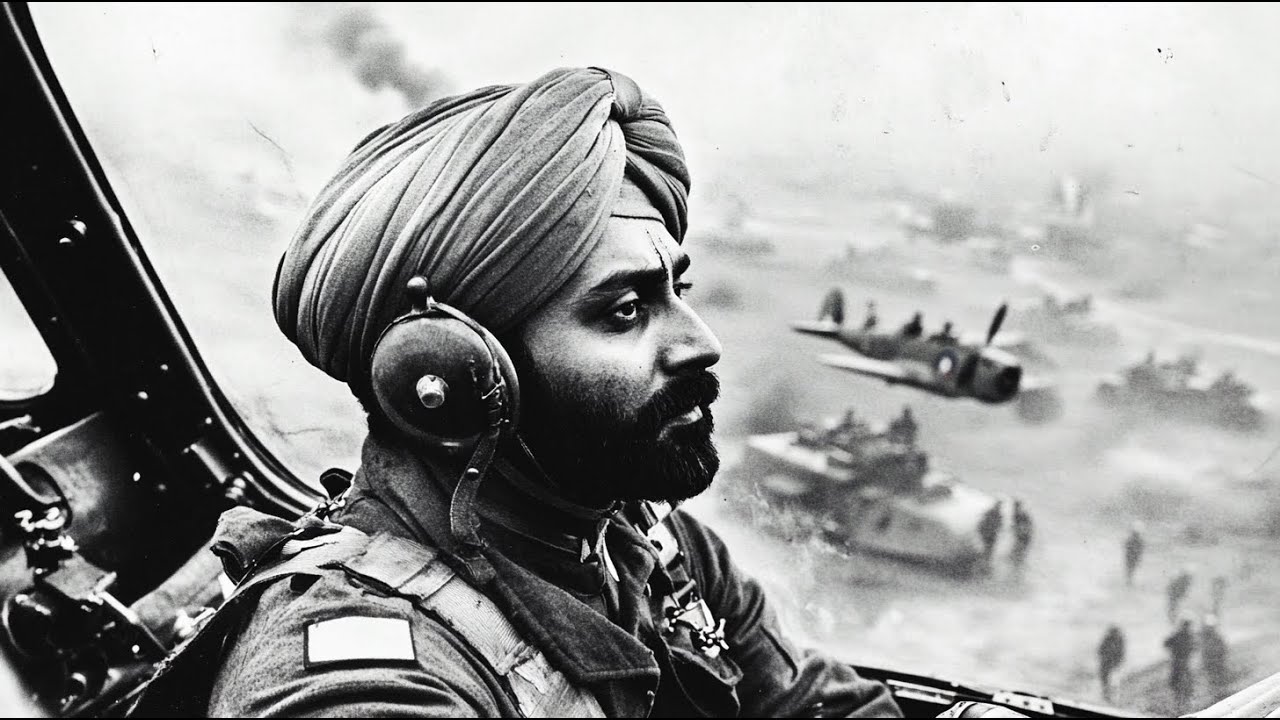
Twenty-Four — trailer
Twenty Four YL-FA-002 · TRAILER · 2025
The Twenty Four — book cover
YL-NOVEL-002 · PUBLISHED

The Twenty Four

24 Indian pilots of the Royal Air Force — 1940–1945 AVAILABLE · KINDLE + PAPERBACK

Literary fiction about the twenty-four Indian airmen selected by the Royal Air Force in August 1940. Training accidents in the Scottish winter. Channel convoy sweeps. Catalinas in the Pacific.

ACQUIRE VOLUME →
ENTER THE READING ROOM →
Flight Lieutenant Man Mohan Singh, RAF Coastal Command, portrait
YL-PILOT-001

FLIGHT LIEUTENANT · RAF COASTAL COMMAND

No. 205 SQUADRON RAF (CATALINAS) · EARLIER SUNDERLANDS WITH COASTAL COMMAND


Man Mohan Singh

The Chacha


RAFVR 1940 – 3 MARCH 1942

ATLANTIC · SINGAPORE / JAVA · BROOME, WESTERN AUSTRALIA

B. 21 MARCH 1906, LORALAI · D. 3 MARCH 1942, ROEBUCK BAY


The Chacha. Pioneer aviator — first Indian to fly solo England–India (1930, Gipsy Moth Miss India; missed the Aga Khan prize by one day). First Indian to fly solo England–South Africa (1934–35). Former chief pilot to the Maharaja of Patiala. Oldest of the 24 by a decade. Could not swim. Served as second pilot of Catalina FV-N (serial W8433). Drowned in Roebuck Bay during the Japanese Zero raid on Broome.

No body recovered. Commemorated Darwin Military Museum · Kranji War Memorial, Singapore.

Pilot Officer Hukum Chand Mehta, RAF, portrait
YL-PILOT-002

PILOT OFFICER · RAF

No. 56 OPERATIONAL TRAINING UNIT · RAF SUTTON BRIDGE (HURRICANE CONVERSION)


Hukum Chand Mehta


WALTON SELECTION 1940 – 3 NOVEMBER 1941

UNITED KINGDOM (TRAINING ONLY)

B. c. 1919/1920 · D. 3 NOVEMBER 1941, NEWCASTLE (AGED ~22)


Selected for the fighter stream — one of five Indians sent to Sutton Bridge to convert to Hurricanes. The man who laughed easily, who climbed into cockpits without apprehension. A pilot whose confidence was not bravado but the genuine ease of a man who trusted his own hands. Killed in training accident before frontline squadron posting completed.

Commonwealth War Graves Commission · Byker and Heaton Cemetery, Newcastle-upon-Tyne.

Air Vice Marshal Ranjan Dutt, IAF, portrait
YL-PILOT-003

AIR VICE MARSHAL · IAF (FINAL RANK)

No. 32 SQUADRON RAF → No. 94 SQUADRON RAF EGYPT → No. 4 SQUADRON IAF


Ranjan Dutt

The Forger


WALTON 1940 – RETIRED AS AVM

UK · EGYPT · NORTH-WEST FRONTIER · BURMA · KASHMIR 1947–48

B. 30 SEPTEMBER 1921/1922 · D. 13 AUGUST 2009, CHENNAI


The Forger. Prince of Wales Royal Indian Military College, Dehradun. Civilian 'A' licence at 16; falsified his birth certificate to meet the Walton age requirement. Selected for the RAF Day Fighter Leaders Course at Tangmere under Douglas Bader, on Spitfires. Post-war: Managing Director of Hindustan Aeronautics Limited.

Vir Chakra (gazetted 1950) — three Hawker Tempest sorties on Kishanganga Bridge, 1947–48 Kashmir War. Direct hit; aircraft heavily shot up but nursed back to Jammu.

Squadron Leader Mahinder Singh Pujji, RAF, portrait
YL-PILOT-004

SQUADRON LEADER · RAF / IAF

No. 43 SQUADRON ("FIGHTING COCKS") · No. 258 SQUADRON · No. 94 SQUADRON · No. 4 SQUADRON IAF (OC)


Mahinder Singh Pujji

The Survivor


WALTON 1940 – POST-WAR

UK · WEST AFRICAN DESERT · EGYPT · NWFP · BURMA (IMPHAL, THIRD ARAKAN)

B. 14 AUGUST 1918, SIMLA · D. 18 SEPTEMBER 2010, KENT (AGED 92)


The Survivor. Sikh; wore his dastar under the flying helmet throughout service. Shot down over the Channel with oil-blinded cockpit, crash-landed near the White Cliffs of Dover — turban full of blood, padding credited with saving his skull. Seven days hospital, back to flying. Shot down 2 Me 109s confirmed, 3 damaged. In Burma, located 300 lost American-commanded African troops in dense jungle.

Distinguished Flying Cross (DFC) gazetted 17 April 1945. Statue unveiled 28 November 2014 at St Andrew's Gardens, Gravesend (sculptor Douglas Jennings).

Air Marshal Shivdev Singh, IAF, portrait
YL-PILOT-005

AIR MARSHAL · IAF (VICE CHIEF OF AIR STAFF)

No. XV SQUADRON RAF HARWELL (SHORT STIRLINGS) → No. 4 SQUADRON IAF


Shivdev Singh

The Night Flyer


No. XV SQN 12 JULY – 23 DECEMBER 1941 (22 OPS) · VCAS 1971

UK / GERMANY (NIGHT BOMBING, 22 OPS OVER THE REICH) · BURMA · 1971 BANGLADESH WAR

B. 20 DECEMBER 1919 · D. 29 DECEMBER 1993


The Night Flyer. Sikh; youngest Sikh pilot of the 24. Co-pilot to Flight Lieutenant Drummond Wilson on 22 Stirling missions over Germany. Left XV Squadron for the Middle East on 11 April 1942; six days later, Wilson was killed in a Stirling crash at Godmanchester. Wilson's family preserved a newspaper clipping of Shivdev as Wilson's co-pilot. As VCAS, planned the air campaign that supported the 16 December 1971 Dhaka surrender.

Wilson family newspaper clipping preserved in UK. Last of the 24 to die in India.
Full Nominal Roll · The Twenty-Four I. The First — killed 1940–1941
001 · Ganjam Subbaramaiah · Killed Prestwick, winter 1940–41 Hindu, Andhra Pradesh; the only southerner. Training accident. First of the 24 to die; no known grave.
002 · Gurbachan Singh · Killed Hullavington, 12 April 1941 Sikh. Clipped telephone wires four days before the Wings Ceremony. Never received his wings. Buried in England.
003 · Ali Raza Khan Pasha · Killed Abingdon, 18 June 1941 Muslim, b. 12 January 1917. Whitley pilot, No. 10 OTU, RAF Abingdon. Aged 24. Buried Brookwood Military Cemetery (Muslim section).
004 · Kali Prasad Chaudhury · Killed Abingdon, 18 June 1941 Hindu. Killed with Pasha in the same Whitley crash. Commemorated at Golders Green Crematorium.
005 · Anandaraj Samuel Gnanamuthu · Missing Hampshire, 11 July 1941 Tamil Christian, Coimbatore; surgeon's son, brother also killed over NWFP. Hurricane pilot, No. 32 Squadron, RAF Ibsley. Aged 22. Runnymede Memorial.
006 · Rustom Nariman Dastur · Killed Boulogne, 30–31 August 1941 Parsi, Bandra, Bombay, b. c. 1919. Pilot of Wellington W5577, No. 12 Squadron, RAF Binbrook. Aged 22. Body recovered at Dieppe; buried Dieppe Canadian War Cemetery.
007 · Chander Parkash Khosla · Killed Boulogne, 30–31 August 1941 Hindu. Second pilot of Wellington W5577 with Dastur. No body; name on the Runnymede Memorial.
008 · Harbans Krishan Khanna · Killed 30–31 August 1941 Killed the same night as Dastur and Khosla — three of the 24 lost in one darkness. Circumstances unrecorded.
009 · Hukum Chand Mehta · Killed Newcastle, 3 November 1941 Hurricane pilot, fighter stream (Sutton Bridge, with Dutt and Pujji). Training accident. Commemorated at Byker and Heaton Cemetery, Newcastle-upon-Tyne.
010 · Tarlochan Singh · Killed during training, date unrecorded Sikh. Date, location, and circumstances all unrecorded.
II. The Pacific — 1942
011 · Man Mohan Singh · Drowned Roebuck Bay, Broome, 3 March 1942 "The Chacha." Sikh, b. 21 March 1906, Loralai/Rawalpindi. Bristol University engineer; first Indian to fly solo England–India (1930, Miss India); Maharaja of Patiala's chief pilot. Oldest of the 24. Second pilot, Catalina FV-N, No. 205 Squadron RAF. Killed in the Japanese raid on Broome, aged 35 — he could not swim.
III. Post-war
012 · Chopra · Died 1954, aged 38 Survived the war. Cause unrecorded — the war's delayed subtraction.
013 · Erlic Wilmot Pinto · Killed Poonch River, 22 November 1963, aged 42 Goan Catholic, b. 29 June 1921, Porvorim. No. 12 Sqn RAF; Vultee Vengeance dive-bombers in Burma; Mentioned in Dispatches, 1944. Took command of AF Stn Palam from the RAF on Independence Day, 1947. Commanded air ops over Goa, Operation Vijay, December 1961. On track for Chief of Air Staff. Alouette III struck telegraph cables (same day as the Kennedy assassination). Posthumous PVSM.
014 · Shivdev Singh · Died 29 December 1993 Sikh, b. 20 December 1919. 22 night bombing missions over Germany in Short Stirlings, No. XV Sqn, RAF Harwell. Burma; contributed to capture of Rangoon. Vice Chief of Air Staff; planned the 1971 air campaign.
015 · Ranjan Dutt · Died Chennai, 13 August 2009 Bengali Hindu, Calcutta, b. 30 September 1921/22; falsified his birth certificate at 16. Prince of Wales RIMC, Dehradun. Hurricane pilot, No. 32 Sqn; No. 94 Sqn Egypt; RAF Day Fighter Leaders Course at Tangmere under Douglas Bader; No. 4 Sqn IAF. Vir Chakra for three Hawker Tempest attacks on the Kishanganga Bridge (1947–48). Air Vice Marshal; MD of Hindustan Aeronautics Ltd — recommended the MiG-21 for India. Father-in-law of Jackie Shroff; grandfather of Tiger Shroff.
016 · Mahinder Singh Pujji · Died Gravesend, 18 September 2010, aged 92 Sikh, b. 14 August 1918, Simla. Hurricane pilot, No. 43 Sqn ("Fighting Cocks") and No. 258 Sqn, RAF Kenley; 2 Me 109s confirmed. Crash-landed at the White Cliffs — turban's padding saved his skull. No. 94 Sqn Egypt; commanded No. 4 Sqn IAF in Burma (found 300 lost soldiers from a Lysander). DFC, gazetted 17 April 1945. TB ended operational flying. Settled in Gravesend, Kent. Autobiography For King and Another Country (2010). Statue in St Andrew's Gardens, Gravesend (2014).
017 · Hari Chand Dewan · Died 22 August 2017, aged 95 Hindu, b. 20 September 1921; youngest of the 24. Served in Burma, Arakan, NWFP, Kashmir 1947, Goa 1961, 1962, 1965, 1971. As Air Marshal commanding Eastern Air Command, witnessed the Pakistani Instrument of Surrender at Dhaka, 16 December 1971. PVSM 1969, Padma Bhushan 1972. Last to retire (1976). Last surviving member of the 24.
IV. Date of death unrecorded
018 · Kenneth Joseph Bhore · Date of death unrecorded Christian, b. 1912, second-oldest of the 24. Chose Pakistan at Partition. Became Director-General of Pakistan's Ministry of Transport.
019 · Edwin Nazirullah · Date of death unrecorded Muslim. Hurricane pilot, Channel convoy patrols; No. 94 Sqn Egypt; co-founder of No. 4 Squadron IAF at Kohat. Chose Pakistan at Partition.
020 · Mian Mohd Latif · Date of death unrecorded Muslim. No. 94 Squadron, Egypt; co-founder of No. 4 Sqn IAF. Post-1947 fate unrecorded.
021 · Om Prakash Sanghi · Date of death unrecorded Hindu. Co-founder of No. 4 Squadron IAF, Kohat. Otherwise unrecorded.
022 · Satya Pal Shahi · Date of death unrecorded Retired IAF 1973 after 33 years. Career details unrecorded.
023 · Mohit Mohan Ghose · Date of death unrecorded Bengali. Trained, served, returned home. No further record.
024 · Chaman Lal Tandon · Date of death unrecorded Age 21 on arrival in England; survived the war. No further record.
2,500,000
Indian subjects who served · 1939–1945
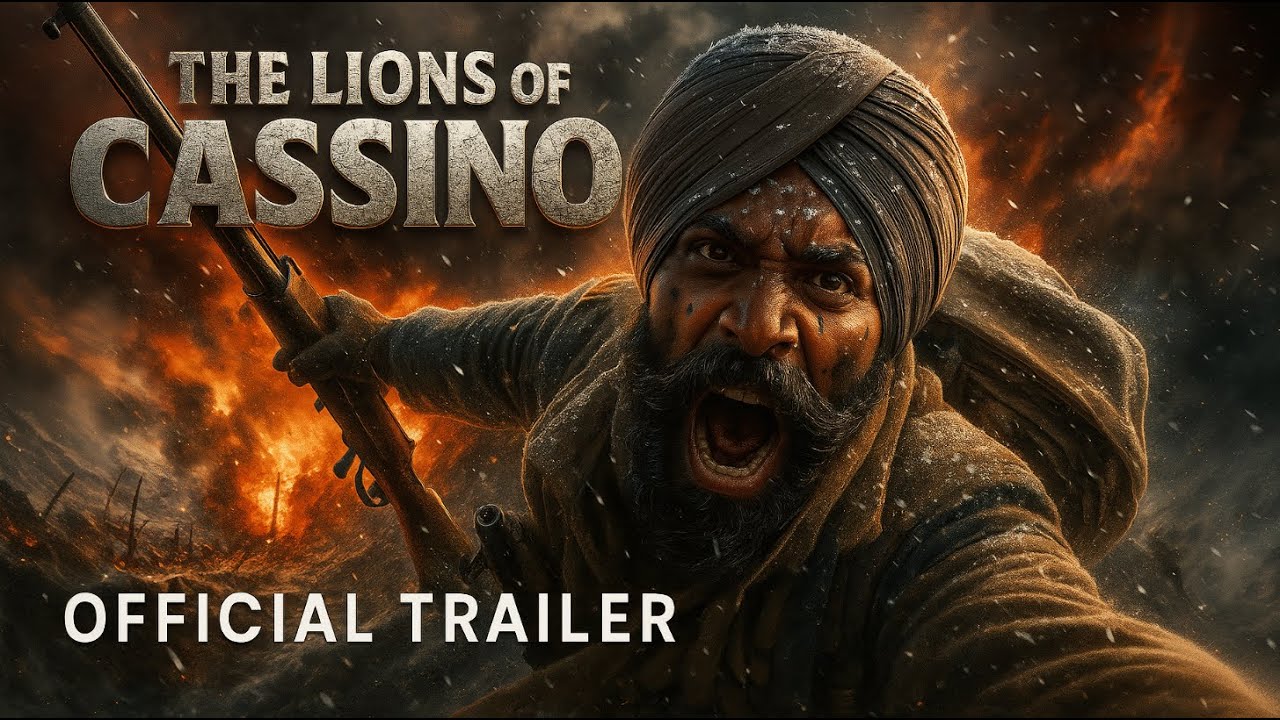
Lions of Cassino — trailer
Lions of Cassino YL-FILM-001 · 2025
Lions of Cassino — book cover
YL-NOVEL-004 · FORTHCOMING

Lions of Cassino

The battle that broke the Gustav Line — 1944 FORTHCOMING · 2026

The Fourth Indian Division broke the line at Monte Cassino after three Allied assaults had failed. Gurkhas, Rajputs, Sikhs, Madrassis — they climbed the mountain under fire that the abbey walls could not contain.

The figure is two point five million. This is the number the archive uses. The figure includes the soldiers, the sailors, the airmen, the sappers, the signallers, the labourers, the stretcher-bearers, the drivers, the cooks, and the syces. The figure does not include dependents. The figure does not include the women who carried messages, or the children who carried water, or the villagers who were killed for housing a wounded man. The figure is an administrative boundary, not a moral one. The archive notes that the figure is also, by any reasonable measure, the largest volunteer army ever assembled in human history. The archive notes that the figure includes eighty-seven thousand dead. The archive notes that the Commonwealth War Graves Commission has been able to recover fewer than half of the named. The other names are not lost. The names were never written down.


Approximately 95,000 Indian soldiers served in the North African and Middle Eastern theatres under the Eighth Army. The Fourth Indian Division played decisive roles at Sidi Barrani and El Alamein. Indian casualties in North Africa: 8,213. Names preserved in Commonwealth War Graves Commission records: approximately 6,600.


Approximately 700,000 Indian soldiers served in the Burma Campaign — the largest single theatre by Indian deployment. The XIV Army at Kohima and Imphal held the line against the Japanese advance at catastrophic cost. Indian casualties in Burma: 36,092 killed, 64,354 wounded. The Battle of Kohima alone killed more Indians than Britons.


Approximately 50,000 Indian soldiers served in the Italian campaign — Cassino, the Gothic Line, the Po Valley. The Fourth Indian Division broke the German line at Cassino after three earlier Allied attempts had failed. Indian casualties in Italy: 5,782 killed. The Commonwealth cemeteries at Cassino and Forlì hold the largest concentrations of Indian war dead in Europe.


The archive notes that not every death came in a named campaign. Indian Army units continued garrison operations on the North-West Frontier throughout the war. Training accidents, disease, and the ordinary attrition of military life in pre-antibiotic conditions accounted for a further 12,000+ Indian deaths. These men do not appear in campaign casualty lists. The archive files them under Home Establishment for want of a better category.

The archive closes Chamber II without conclusion. The chamber does not resolve into a number that can be grieved or a list that can be memorised. It resolves into the recognition that the record the empire kept is the record that exists. Anything else is recovery — one man at a time, twenty-four pilots at a time, theatres and campaigns and bodies without markers. The archive files Chamber II tonight and will file it again tomorrow, and the chamber will be longer tomorrow, because the names keep arriving. Someone is always writing them down.


The current operational night. The compilation that generates at Isha and burns at dawn. Tonight


The medals survived. Most wearers did not. The archive holds the objects without the bodies. What was set into gemstones was what the empire returned.

Chamber III Follows CHAMBER III · THE OPERATIONS ROOM →
YL

Filed by the Compiler · ATTACHMENT II · COLONIAL RECORD · 5 JUNE 2026

YL-CMP-ATT-II · CLASSIFICATION HOLD