The archive opens this chamber while the work is still moving. The compilation filed here is unlike those that precede it: not a document recovered, not a record closed, but a file still opening, not closing for years, because the novel it concerns is being written now. Delhi keeps the compilation. Lahore keeps the operation. The two clocks in this chamber are the archive's way of holding both cities at once.
The chamber functions under its own protocol. The record before this one was filed as it closed. This one files as it happens. Fragments arrive before they are complete. Chapters exist first as structure, then as sentence, then as paragraph, then as the thing on the page. The asset is already on the other side of the Ravi when the chapter describing his crossing is still being written. This is the condition of live production. The archive has accepted it.
The record follows. The novel's current state. The forty-four movements in the order the asset will live them. The seven personnel whose files the operation has opened. The register the prose itself moves through as it tracks the interior built in the Chakrata caves and the interior lived after the crossing. The archive files this chamber tonight under live production. The compilation number burns at dawn. The file opens again tomorrow.
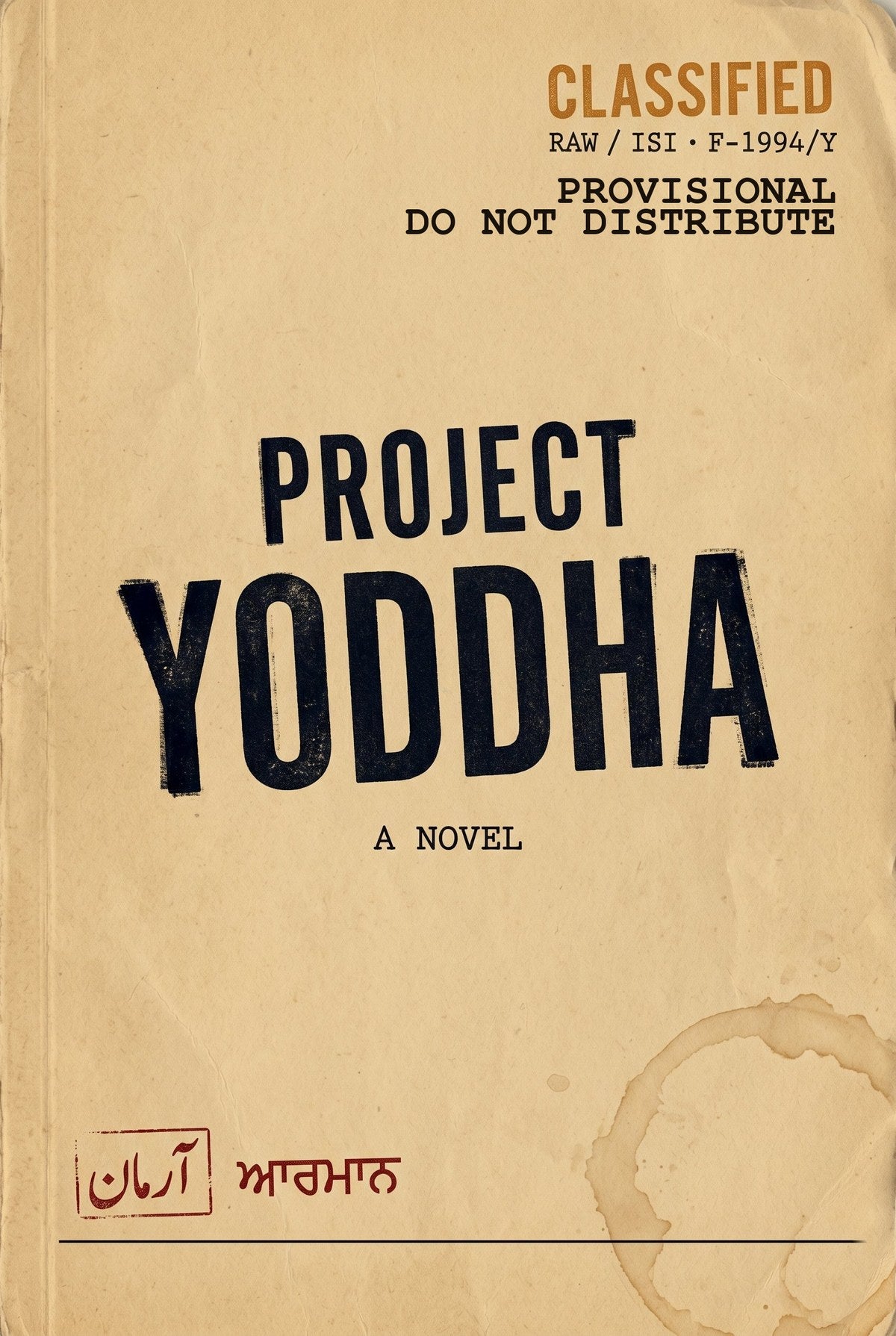
The novel opens on Hooda pitching an operation and closes on Sikander walking the same road he nearly died on as a boy. Forty-four chapters mapped across five parts.
Seven active dossiers. The archive holds each file under the operational name assigned at enrolment. The seventh is kept under a classification that does not appear in the index. The archive notes only that Malik's second notebook has never been filed.

File opened at enrolment. The asset is not briefed on the extent of his own manufacture.

File holder. No higher authority within the operation.

No file. Raina does not file. Raina remembers.

Not on any intelligence list at the novel

Runs Pakistan. Believes he is being run by God. Both may be true.

The one witness who marries the asset and does not become part of the operation.

The second notebook has never been filed. Existence unconfirmed by the state.
The archive holds three specimens from the file. One from before the mountain. One from the crossing itself. One from after. They are not in sequence. They are a triangle. The reader who sits with all three will understand something about the asset the file alone cannot carry.
The file he carried that winter weighed less than a kilogram. Inside it: a name, a photograph, three intercepted receipts, the sequence in which the receipts had been signed. Not a man's life — an operational geometry the shape of a man, drawn in what the state could prove. Four hours each morning he walked the perimeter of Nankana Sahib, drinking tea at the same stall, watching who returned and who did not. On the seventh morning the target turned a corner he did not usually turn. He noted the corner. He did not follow. Following was not yet the instruction. The instruction was to see.
The Brigadier had not spoken since dusk. The boy had stopped waiting to be spoken to in the second year. What was happening in the stone room that winter was not instruction. It was weather. Something in the mountain settled over them both at an hour the clock did not measure, and the next morning something the boy had believed about himself would be gone, and he would not mourn it, and the Brigadier would not congratulate him. The removals were cumulative. After a while there was less of him to remove, and what remained began to have edges the mountain recognised.
The shrine kept its own time, which did not correspond to the clocks in the city, and which he had stopped resisting sometime in the third year. What he had been told to do — collect information, assess the network, report on the patterns by which the faithful arrived and left — he had done, and was still doing, and would continue to do for as long as the apparatus required. But the doing was happening at a distance now from the thing he could not name and did not need to name, which was the thing that happened when he sat on the cold marble in the pre-dawn hours and heard the building breathe around him. The apparatus still asked its questions. The answers he gave were accurate. The answers were not the things he knew.
The archive has placed these three specimens in the file. The file is not complete. The file was never going to be complete.
BOOK ONE · THE BECOMING · FORTHCOMING